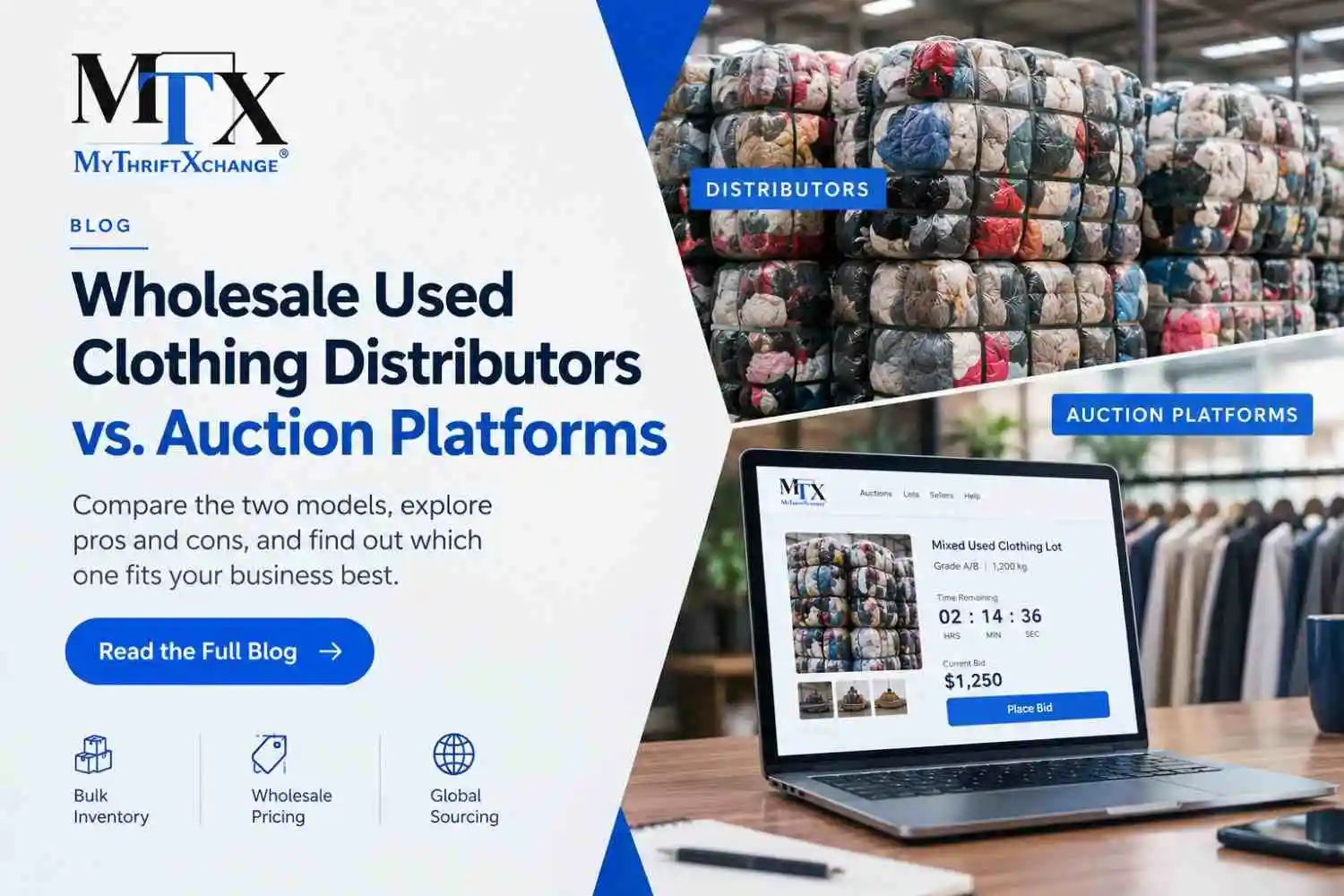
Wholesale Used Clothing Distributors vs. Thrift Auction Platforms
At some point, every bulk used clothing buyer runs into the same fork in the road. Do you lock in a relationship with a distributor, or do you take your chances bidding on an auction platform? Both get you inventory. They just get you there in very different ways.
This post lays out the trade-offs, plainly, without pretending one option is obviously better. We’ll look at price, selection, and how much commitment each model asks of you. If you’re a used clothing wholesaler, importer, exporter, or distributor trying to figure out where your next order should come from, this one’s for you.
What Is a Wholesale Used Clothing Distributor?
A distributor is the traditional model. One company sources the clothing, sorts it, grades it, and resells it to you at a fixed or negotiated price. You’re not competing with anyone else for that lot. You’re just agreeing on a number.
How Distributor Relationships Typically Work
It usually starts as an ongoing vendor relationship, often with a dedicated account manager who knows your business and what you tend to order. Terms get negotiated once, early on, and then reused for future purchases, so you’re not renegotiating every single time. Payment terms are set upfront too, things like net 30 or a deposit arrangement, so there’s rarely any guesswork once the relationship is running.
What Buyers Get From a Distributor
You get pre-sorted, consistent inventory on a schedule you can actually plan around. There’s one point of contact for questions, complaints, or reorders, which honestly makes life easier when something goes wrong. The trade-off is price transparency. You’re generally accepting a quoted price rather than competing for a better one.
What Is a B2B Auction Platform?
An auction platform flips the model. Sellers list lots. Buyers bid. The price gets set by real demand, in real time, instead of a quote handed down from one vendor.
How Bidding Actually Works
A seller lists a bulk second-hand apparel lot with photos, weight, grade, and category details, basically everything you’d need to decide if it’s worth bidding on. Buyers place bids within a set window, and whoever’s on top when the auction closes wins the lot. Some sellers set a reserve price too, meaning the lot simply won’t sell if bidding doesn’t reach their minimum.
What Buyers Get From an Auction Platform
You get a much wider mix of lots and categories in one place, since you’re not tied to a single vendor’s stock. There’s no long-term contract or minimum order required just to get started. And the pricing is transparent in a way distributor deals rarely are; you can literally watch what other buyers are willing to pay before you decide your own number.
Pros and Cons of Each Model
| Pros | Cons | |
| Distributor | Predictable delivery schedule and consistent grading. Simplified reordering once you’re established. One vendor to manage instead of tracking multiple wins. | Less price transparency; you generally take the quote. Slower to switch categories or test new grades. May require a minimum order or long-term contract. |
| Auction Platform | Transparent, market-driven pricing on every lot. No long-term commitment; bid only when you want to. Access to a wider mix of sellers, categories, and grades. | Requires active participation; someone has to bid and monitor listings. Inventory availability can shift week to week. New buyers need to learn the bidding process before their first win. |
So Which Model Actually Fits Your Business?
You’re New or Small, and Testing a Category
Auctions are the lower-risk move here. You’re not signing up for a long-term contract just to see whether a category resells well in your market. You can bid small, learn fast, and adjust before you’ve committed real money.
You’re a High-Volume Repeat Buyer
A distributor relationship tends to make more sense once volume gets predictable. It guarantees supply at a cost you already know. That said, plenty of high-volume buyers still keep a distributor for their baseline supply and use auctions on top of that, either to grab extra volume or to chase better pricing when it’s available.
You Need a Very Specific Grade or Category Every Month
This one’s worth thinking through more carefully. A distributor may be able to guarantee you’ll get that grade consistently, but auctions usually give you more control over what you actually pay for it. A hybrid setup often works best here: distributor for guaranteed volume, auctions for the opportunistic buys when the right lot shows up.
Questions Worth Asking Before You Choose
- How predictable does my supply chain really need to be, month to month?
- Can my business handle some price variability if it means better pricing on average?
- Do I actually have time to monitor listings and bid, or would I rather set it and forget it?
- Am I testing something new here, or trying to scale what already works?
Answer those honestly, and the right model usually becomes obvious.
How MyThriftXchange Combines the Best of Both
This is exactly the gap MyThriftXchange was built to close. You get the transparent, market-driven pricing of an auction, paired with a subscription model that removes most of the per-deal negotiation friction you’d normally deal with in a distributor relationship. Every lot is verified and graded before it’s listed, which takes a lot of the guesswork out of pure auction buying.
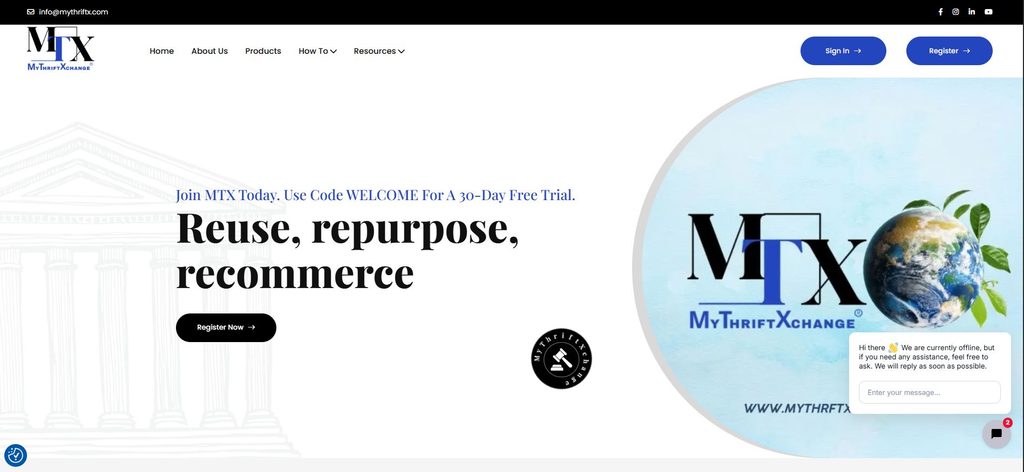
For sellers, this creates a simple way to put bulk stock in front of bulk buyers who are actively looking for secondhand clothing. Instead of relying only on personal contacts or long-term distributor relationships, sellers can use the marketplace to reach new buyers.
In short, MyThriftXchange gives you the openness of an auction with the simplicity of a more structured buying relationship. It is designed to make bulk secondhand clothing trade easier to understand, easier to compare, and easier to repeat.
Conclusion
Here’s the honest takeaway: this isn’t really an either-or decision. If you’re testing a new category, start with auctions and keep your risk low. If your volume is steady and predictable, a distributor might be your anchor. And if you’re somewhere in between, most buyers land on a mix of both.
But if you haven’t tried a B2B auction platform yet, now’s a good time to start. Real-time pricing means you’re never stuck guessing whether you overpaid, and there’s no long-term contract standing between you and your next lot. Whether you’re buying bulk apparel to resell or looking to move inventory as a seller, an auction platform like MyThriftXchange gives you the flexibility a fixed-price distributor simply can’t match.
Ready to see what’s available right now? Register as a Buyer on MyThriftXchange and start browsing current lots today.
Frequently Asked Questions (FAQs)
It depends on the lot and the timing. Distributors offer a fixed, predictable price, while auction platforms let market demand set the price in real time, which can go either higher or lower depending on who’s bidding. Buyers chasing the best possible price often lean toward auctions, while buyers who value predictability lean toward distributors.
Yes, you can use a distributor as well as an bulk auction platform. A distributor covers your baseline, predictable supply, while an auction platform lets you pick up extra volume or better pricing when the right lot appears.
No, that’s one of the main advantages. You can bid on a single lot without any ongoing commitment, which makes auctions a lower-risk way to test a new category or grade.
Look for platforms with verified lot grading, like MyThriftXchange, where listings include weight, grade, and category details upfront. This significantly cuts down on the guesswork that comes with unverified listings.
Auctions tend to be the easier entry point since there’s no minimum order or long-term contract required. It lets a new buyer test the waters before scaling up to a bigger commitment like a distributor relationship.
Once registered, most buyers can start bidding immediately; there’s no lengthy vendor onboarding process like there often is with a new distributor relationship.
MyThriftXchange offers a range of second-hand products for bulk buyers, depending on current inventory and available lots. Categories can include used footwear in bulk, used books, pre-owned toys wholesale, bric-a-brac, bulk pre-owned clothing, and mixed rags. Buyers can browse available lots and check the specific product details, quantities, grades, and other listing information before bidding.
Platforms with buyer protection typically have a dispute or resolution process for this exact situation; check the specific platform’s policy before your first purchase.
Most traditional distributors require a minimum order or ongoing contract. Auction platforms like MyThriftXchange let you bid on individual lots with no long-term commitment.


