


The $367B Opportunity: What the Future Holds for Secondhand Apparel
The second-hand market for clothing is no longer a niche, it is an enormous industry and is rapidly revolutionizing the entire value chain in the fashion industry for B2B players alike. The growing pressures of overstocked inventory, margins, and regulatory laws on sustainability are driving the entire apparel industry to adopt second-hand clothing as an innovative and viable business model. What was once viewed as a clearance or liquidation channel is now a core part of inventory management, revenue diversification, and circular fashion strategies for enterprises across the industry.
For B2B players, the future of second-hand clothing will be based on organized resale, bulk procurement, recommerce collaborations, and sorted grading. Innovations related to logistics, artificial intelligence-assisted grading, and worldwide trade networks will make it possible for companies to maximize the potential of their returned, unsold, or pre-owned items. As demand for affordable and sustainable fashion continues to grow worldwide, B2B secondhand apparel is positioned not just as a sustainability solution, but as a long-term growth engine redefining how fashion businesses monetize products throughout their entire lifecycle.
Second Hand Apparel Market Size and Growth Trend
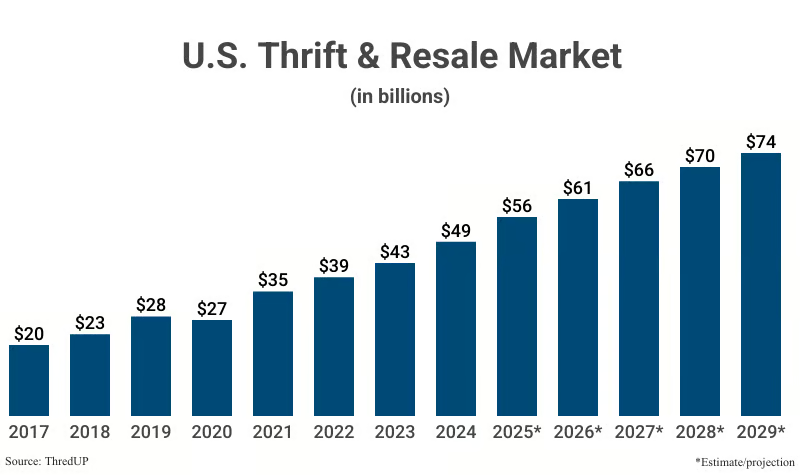
The global secondhand clothing market is ranked among the top fastest growing sectors of the fashion industry. The sector is expected to enter a $367 billion industry by 2029, and it is currently valued at nearly threefold since 2020. The increase in value has been faster than that of the traditional retail sector. This is associated with three main drivers: sustainability, economic accessibility, and digital technology.
The Top Market Growth Drivers
The three major drivers of reshaping the growth are present below:
- Sustainability: Most North American consumers are shifting to buy secondhand due to frustrations with the rise in fast fashion and decline in quality. This is in part to the waste created by the fashion industry changing styles rapidly, and exploitation of cheap labor in developing countries.
- Economic Pressures: 59% of consumers would switch to secondhand when new apparel is too costly, their spending power continues to decline. This is especially true in the United States as cost of living increases leave less disposable income
- Gen Z and Millennial Influence: 68% of younger buyers bought secondhand in 2024, with the overall market increasing by 14.3% from 2024
The B2B Bulk Secondhand Apparel Trade
While consumer resale grabs headlines, the B2B wholesale market for bulk secondhand clothing forms the backbone of the global secondhand economy. Bulk secondhand clothing refers to used clothing sold in bulk quantities by bales (typically 50kg), kilograms, or shipping containers to bulk buyers, distributors, and retailers, largely in the developing world.
The Global Supply Chain
The B2B bulk secondhand apparel trade is a multi-stage global supply chain that is highly structured and designed to move large volumes of used clothing across borders efficiently.
- Collection: Second hand garments are sourced via charity, thrift stores, donation, and municipal textile recycling in Europe and North America.
- Sorting & Grading: The clothes are arranged by destination, quality, and type, and compressed into uniform bales.
- Export & Distribution: The package is then shipped out and sold in import hubs of African, Asian, and Latin American.
Main Export and Import Hubs
- Exporters: The U.S.A. and E.U. mainly determine the international supply, as the overconsumption by these areas leads to the donation of huge quantities of clothes every year.
- Importers: According to 2023 data from the World Integrated Trade Solution (WITS) Pakistan, United Arab Emirates, Guatemala, Kenya, Ukraine, Chile, Poland Malaysia, Uganda and Honduras, and are the largest importers of Worn Clothing.
Business Models in the B2B Bulk Trade
The wholesale secondary market supports a variety of business models aside from retail resale..
Merchant Wholesalers and Distributors
Bulk buyers buy bales in bulk from sellers and sell them regionally, often adding value through pre-sorting or niche classification (winter wear, denim).
Online B2B Marketplaces
Online marketplaces are starting to appear to connect global suppliers with bulk buyers, increasing transparency, price, and availability of supply.
MyThriftXchange, an industry leading secondhand apparel auction site for B2B bulk sales is targeted directly at wholesale traders. Through the MyThriftXchange platform, suppliers can put up their bulk lots and bales for auction, and buyers can make their bids openly based on comprehensive product descriptions and prevailing market demand.
Sorting Facilities and Exporters
Most of the large-scale operators in the bulk secondhand apparel trade usually run sorting plants, which are the main support of worldwide supply. These factories receive donated or charity clothes and sort and grade them by type, quality, and brand. Operators often directly export to overseas buyers while customizing bales according to market or buyer’s demand.
Challenges in the Bulk Secondhand Market
Despite growing, the B2B market is vulnerable to operational and regulatory problems such as tariffs, shipping container volumes, and heavy storms in major shipping regions.
Quality Control and Contamination
Mixed bales of non-wearable items require strict grading to guarantee buyer trust and market integrity.
Regulatory Pressures and Import Bans
African nations have proposed or implemented bans on secondhand imports to protect local textile sectors, creating trade uncertainty. Recent notable actions were Rwanda in 2016 implementing a phased ban to bolster its own textile industries and Nigeria announcing their intention to introduce a ban on the import of certain textile products citing hygiene risks
Environmental Impact of Shipping
Long-distance shipping of bales releases carbon, raising questions over the sustainability of global mass trade.
New Age Wind-powered cargo ships have been developed and are slowly being adopted to combat carbon emissions and fuel usage
Future of B2B Secondhand Apparels Market
Innovation and market evolution are shaping the future growth period.
AI and Automation in Sorting
AI-powered systems increase grading accuracy and efficiency, reducing labor costs and increasing bale consistency. These systems use validation through visual recognition that can automatically classify garment type, composition and structure with similar accuracy to human grading but at an accelerated pace
Development of Niche Markets
Niche bales such as retro sportswear, mixed clothing rags, credential clothes, wholesale used shoes, used books, second-hand children’s toys, or pre-sorted denim are being crafted to meet specific regional and cultural demands.
Added-Value Services
Forward-thinking B2B operators are increasingly offering added-value services to stand out in the highly commoditized bulk secondhand apparel market. These services include pre-sorted, category-specific bales tailored to buyer needs, as well as packaged logistical support such as consolidated shipping, labeling, and inventory management.
Conclusion: A Scalable, Sustainable Future
The secondhand fashion market is currently a $367 billion global business with far-reaching economic and environmental importance. While resale among consumers makes headlines, the B2B bulk trade of secondhand bales remains the strength of scale, connecting excess apparel in developed nations with affordable fashion demand globally. With technology, regulation, and consumer behavior evolving, the future of fashion is increasingly circular, increasingly global, and increasingly wholesale-focused.
To navigate and succeed in the rapidly evolving B2B secondhand apparel market, having access to the right trading platform is essential. MyThriftXchange is built specifically for bulk B2B secondhand apparel auctions, connecting verified buyers and sellers from around the world in a transparent, efficient marketplace. By enabling suppliers to list bulk lots and bales for open auction and allowing buyers to bid based on real-time market demand, MyThriftXchange simplifies price discovery, improves trust, and accelerates cross-border trade. For wholesalers, exporters, and large-volume buyers, MyThriftXchange offers a smarter, tech-driven way to source, sell, and scale in the global secondhand apparel economy.
Frequently Asked Questions (FAQs)
The B2B secondhand apparel market involves buying and selling used clothing in bulk quantities between businesses. This includes wholesalers, exporters, and retailers who trade large volumes like bales, containers, or sorted clothing lots.
The secondhand market is growing due to rising demand for affordable fashion, increasing awareness of sustainability, and better digital platforms. Nowadays, businesses and consumers both want cost-effective and eco-friendly alternatives to fast fashion.
Bulk secondhand clothing refers to large quantities of used garments sold together, often packed in bales or containers. These are usually sorted by type, quality, or category for resale in different markets.
Bulk secondhand clothing is mainly bought by wholesalers, exporters, and distributors. Many buyers are based in developing countries where demand for affordable clothing is high and resale businesses are growing.
Secondhand clothing reduces textile waste, lowers demand for new production, and minimizes environmental impact. It supports a circular economy by extending the life of garments and reducing landfill waste globally.
The market is growing rapidly and is expected to reach $367 billion by 2029, nearly three times its 2020 value, driven by sustainability, affordability, and digital technology.
Major countries like Pakistan, UAE, Guatemala, Kenya, Uganda, Honduras, Malaysia, and Poland, import bulk secondhand clothing, where affordable fashion demand is high and resale markets thrive.
In bulk secondhand apparel, the business models include merchant wholesalers, distributors, online B2B marketplaces, and sorting facilities offering tailored or pre-sorted bales for global buyers.
MyThriftXchange provides a transparent auction platform for B2B sales, allowing suppliers to list bulk lots and buyers to bid based on real-time demand, making sourcing and selling faster and more reliable.
Explore Second Hand Products for Auction


