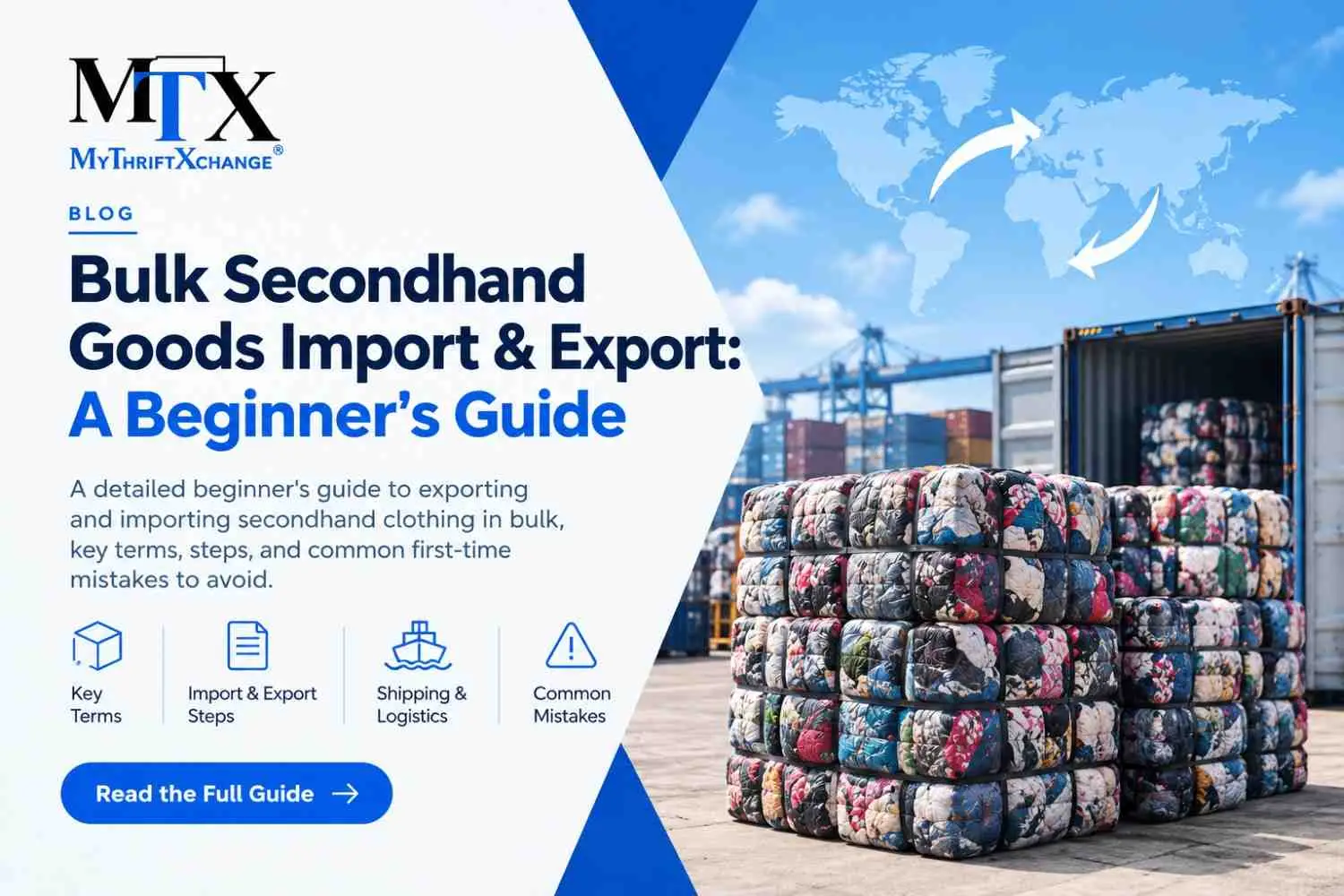
Secondhand Goods Export & Import: A Beginner’s Guide for B2B Buyers
The secondhand clothing trade isn’t some niche side hustle anymore. It’s a real business, and it’s growing fast. More buyers and sellers are getting into it every month, often without much of a roadmap.
If you’ve never exported or imported secondhand goods, the whole thing can feel like a lot at once. New vocabulary, forms you’ve never seen, steps that don’t quite make sense until you’ve done them once. That’s normal. Everyone starts here.
This guide is meant to get you past that first hurdle. We’ll walk through both sides of the trade, buying and selling, so you know what’s coming next at each stage. And once you’ve got the basics under your belt, we’ll point you toward deeper guides on HS codes and freight for when you’re ready to go further.
Why This Trade Is Growing So Fast
A few things are pushing this industry forward right now, and it’s worth understanding them before you jump in.
For one, affordable clothing is in demand almost everywhere. Secondhand goods give people real quality without the price tag of new inventory. At the same time, sustainability pressure is changing how retailers and donors think about unsold or returned stock. Landfill used to be the default. Resale is becoming the norm instead.
There’s also a shift happening in who’s doing this trade. It used to be dominated by a handful of large exporters. Now small and mid-size businesses are getting in too, partly because digital marketplaces have made the whole process far less intimidating than it was even five years ago. You don’t need decades of industry contacts to place your first order.
Key Terms Worth Knowing Before You Start
You don’t need to memorize a glossary. But a handful of terms come up constantly, and knowing them will save you from feeling lost during your first few deals.
Export and import simply mean moving goods across a border for commercial sale, as opposed to personal use. An HS code is the customs classification number every shipment needs. Customs uses it to figure out duties and whether the goods are even allowed in.
Then there’s a bale, which is a compressed, tightly bound unit of sorted or mixed clothing, and a container, which comes in two flavors. FCL means you’re filling a full container yourself. LCL means you’re sharing space with other shippers, which is usually cheaper if you’re not buying at scale yet.
On the sourcing side, you’ll see the word grade a lot. It’s a quality classification, things like Cream, Grade A, Grade B, or Grade C, and it tells you roughly what condition the clothing is in and what it’s likely worth. Mixed rags is different: that’s unsorted textile material, usually headed for recycling rather than resale. And a lot is just a specific batch listed for sale, with a defined weight and category attached to it, something like “50kg Grade A women’s tops.”
How Importing Secondhand Clothing Actually Works
Buying used clothing in bulk from overseas follows a fairly consistent path once you’ve done it a time or two.
You’ll start by registering as a business buyer on whatever sourcing platform you’re using. Most will ask for basic business details before letting you bid on anything. From there, you pick a grade and category and actually read the lot details; don’t skip this part, since the weight, grade, and photos tell you a lot about what you’re really getting.
Once you’ve paid and locked in shipping terms (know who’s covering freight and insurance before you agree to anything), the next hurdle is customs clearance. This is where the correct HS code and paperwork matter most, and honestly, it’s where most first-timers hit a wall. When the shipment finally lands, inspect it against what was described in the listing. Then sort it and get it ready to resell based on what your market actually wants, because not every grade moves the same way in every region.
How Exporting Secondhand Clothing Actually Works
If you’re selling instead of buying, the process runs the other direction but hits similar checkpoints.
Sorting and grading your inventory has to happen before you list anything. Buyers are relying on your grading to make a purchase decision, so accuracy here builds the kind of trust that gets you repeat business. From there, you list in bulk through a wholesale channel or auction platform, ideally with honest photos and descriptions instead of anything that oversells the condition.
Get your export documentation ready ahead of time rather than scrambling once a sale actually closes. Then arrange freight, confirm delivery terms with the buyer, and once the goods are moving, send tracking and shipment confirmation. That last step seems small, but it’s often what separates a one-time buyer from someone who comes back.
The Paperwork You’ll Keep Running Into
A handful of documents show up again and again on both sides of this trade:
- Commercial invoice: states the value and details of what’s being shipped
- Packing list: breaks down exactly what’s in each package or container
- Bill of lading or airway bill: functions as the shipping receipt and carrier contract
- Certificate of origin: required by some destination countries to confirm where goods came from
- Import/export license: required in many places, depending on local trade rules
Keep both digital and physical copies. Most customs delays trace back to missing paperwork, not missing goods.
Mistakes Almost Everyone Makes the First Time
Nearly every new buyer or seller trips over at least one of these. Might as well know them now instead of learning the hard way.
People routinely underestimate freight and customs costs when they’re budgeting, and those fees add up quickly enough to eat into a margin that looked fine on paper. Some skip checking import restrictions in the destination country altogether, only to find out later that used clothing is limited or outright banned there. Others skim past lot inspection details and get blindsided by a grade mismatch when the shipment finally arrives.
It’s also easy to forget that customs delays are the rule, not the exception, so build a buffer into your resale timeline instead of assuming everything ships on schedule. And before your first cross-border deal with someone new, it’s worth taking the time to verify they actually have a track record. A little due diligence up front beats a costly surprise later.
What You’re Actually Paying For, Beyond the Lot Price
The purchase price is just one line item. Before you bid, think through the rest of the total cost too:
- Freight and container shipping fees
- Customs duties and clearance fees
- Insurance for the shipment
- Local delivery or trucking from port to warehouse
A decent habit: rough out your total landed cost before you place a bid, not after you’ve already won the lot and it’s too late to walk away.
Where MyThriftXchange Fits In
None of this requires figuring everything out solo. MyThriftXchange was built specifically to make cross-border bulk buying less of a leap for people doing it for the first time.
Every lot listing is verified, which cuts down on the grade-mismatch surprises we mentioned earlier. Payments run through Stripe, so both sides of the transaction are protected. And clear, consistent grading standards mean you actually know what you’re bidding on, instead of guessing.
MyThriftXchange also makes it easier to find the right stock without spending hours searching. Buyers can browse different lots, check the quantity and grade, and see the details before placing a bid. Sellers can list their bulk clothing and reach buyers in other countries. The platform keeps the process simple, so you can focus on finding good stock and making the right deal.
If you’re ready to buy or sell bulk lots of second-hand clothing, take a look at our quick guides on how to buy on MyThriftXchange and how to sell on MyThriftXchange.
Ready to start your first cross-border deal? Register as a Buyer or Seller today.
Frequently Asked Questions (FAQs)
1. Do I need a business license to import used clothing?
Most countries require some form of business registration to import commercial quantities of goods, though requirements vary. Check your local customs authority before your first shipment.
2. What documents are required for customs clearance?
Typically, a commercial invoice, packing list, bill of lading, and the correct HS code declaration are compulsory. But the exact requirements may vary by country.
3. Can individuals import bulk secondhand clothing, or only registered businesses?
Bulk/commercial-quantity imports are generally treated as a business activity by customs authorities, even if the importer is a sole proprietor rather than a large company.
4. Which countries have the highest demand for imported used clothing?
Demand for used clothing is strongest across parts of Africa, Latin America, and Eastern Europe, though specific demand varies by clothing grade and category.
5. How long does the full process take from purchase to resale?
It varies by shipping route and customs processing time, but buyers should generally plan for several weeks between purchase and having inventory ready to resell.
6. Do I need a customs broker for my first shipment?
It’s not always required, but many first-time importers/exporters use a customs broker to reduce the risk of documentation errors and delays.
7. What is an HS code, and why does it matter so much?
It’s a customs classification number assigned to every product type. Customs officials use it to work out duties and taxes, and to decide whether a shipment is even allowed in at all. Get the code wrong, and you’re looking at delays or fines.
8. What does “grade” actually mean for secondhand clothing?
It tells you the quality level of a given lot, things like Cream, Grade A, Grade B, or Grade C. Higher grades mean better condition and usually a higher resale price. It’s the fastest way to know roughly what you’re buying before it arrives.
9. How much should I set aside beyond the purchase price?
Budget for freight, customs duties, insurance, and local delivery on top of whatever the lot itself costs. These vary quite a bit by country and shipment size, but they can add up to a real chunk of your total spend. Always estimate the landed cost, not just the sticker price.
10. What second-hand products can I buy on MyThriftXchange?
MyThriftXchange offers a variety of second-hand products in bulk for wholesalers, importers, and exporters. Available categories include bulk pre-owned used clothing, pre-owned footwear, bulk used toys, used books, bric-a-brac, and mixed rags. Buyers can browse available lots, compare product grades, quantities, and listing details, and bid on inventory that suits their business needs.
11. Is it legal to import secondhand clothing everywhere?
No. Some countries restrict or flat-out ban used clothing imports to protect their local textile industries. Check the current rules for your destination country before you commit to anything.
More Insights from MyThriftXchange


Wholesale Used Clothing Distributors vs. Auction Platforms